Tuesday, 9 November 2010

Post 11-Advanced production skills workshop 1

In the lesson we began by discussing 'Film Noir', which translates as 'Black Film'. Nino Frank,1946, a French film critic came up with the idea and introduced it to Hollywood. Film Noir reflected the trend of American crime and detective films, and also encompassed a dark, downbeat 'Black' theme. Film Noir however should not be described as a genre, it is a style/mood/theme of the film in question.

Film Noir is  a cinematic term used primarily to describe stylish Hollywood crime dramas, particularly those that emphasize cynical attitudes and sexual motivations. Hollywood's classic Film Noir period is generally regarded as stretching from the early 1940s to the late 1950s.These films display the insecurities of the time period. They also counterbalance the optimism of Hollywood's musicals and comedies. The general story's portray a cynical, hard-hearted, disillusioned male character who encounters a beautiful, promiscuous, a-moral double-dealing and seductive 'Femme Fatale'. She may persuade him into being the 'Fall Guy', often following a murder.


Once we had watched the clips of Film Nior we began talking about Highlights and Shadows. The use of black and white can manipulate the space of the scene, as well as this it can show inferior and superior characters, for example dark lighting would represent an inferior antagonist character, in contrast, bright lighting represent a superior character and the protagonist. Black and White film creates shadows and there are two types of shadow, the first being Cast Shadow. A cast shadow is created when the object, for example a character, blocks the light source and thus 'casts' a shadow. An attached shadow occurs when lighting fails to to illuminate part of an object because of its shape and size.


We light objects by creating both highlights and shadows to create our sense of a scene's space. There are two different ways to describe shadows; attached and cast. Lighting also shapes a shot's overall composition." In the shot below the gang members are brought into a unit "by the pool of light cast by the a hanging lamp. At the same time, it sets up a scale of importance, emphasising the protagonist by making him the most frontal and clearly lit figure."


Finally we discussed how lighting can affect our sense of shape and texture. We watched  Lemon by Hollis Frampton  as this illustrates this very well.


After watching this short film i realised how much you could manipulate the shape of an object through the use of lighting. So following on from this we got into two groups and attempted to rein act what the video showed. The group i worked in used a sea shell, we had black paper, and a torch. We turned all the lights off and put the object in the middle of the black paper and moved the torch around it going on top or below it, seeing how we could effectively use lighting. The video below shows our attempts at stylistic lighting.


I feel that the skills I've learnt in this workshop will very prove useful when it comes to the production of my own film. I can now fully understand the effect that lighting has on a film, i will now be able to add bits of my knowledge into my own production, thus improving the overall quality of the film. I am pleased i completed this workshop and feel it have given great incite into the importance of lighting within film.

Monday, 8 November 2010

Post 10- Job roles

Creating a short film will mean we all individually need to understand the job roles and responsibilities within a film production crew to decide how we will divide up the work amongst our small groups. This knowledge will aid us in working together coherently as a team and hopefully aid the success of our production.

The film industry divides itself into five sectors:
•Development - the writing, packaging and financing of film ideas and scripts
•Production - the process of setting up and shooting every scene in a film.
•Post Production - where all these shots are assembled, treated and mixed into a finished product.
•Distribution - the process of selling this product to audiences, via the cinemas, retailers and rental firms.
 •Exhibition - the cinemas which screen the film for the general public.


There are literally hundreds of different jobs in the UK film industry, each one requiring a unique combination of specialist skills. The majority of these roles are found within the film production sector, and production crews are divided into standard departmental hierarchies. Each department has definite tasks and allotted objectives at particular stages in the production process.


Direction.
Perhaps the best known role within the Direction department is that of Director, the person who is ultimately responsible for the creative vision and overall style of a feature film. Within this department, the Director is also supported by a number of Assistant Directors, who ensure that the Director's artistic ambitions are achieved during the filming process by providing logistical, organisational and time-management support.
Other roles in the Direction department include the Script Supervisor who oversees the continuity and edibility of each sequence as it is shot. The most junior role is that of Runner, which encompasses a wide range of general support duties.

Camera.
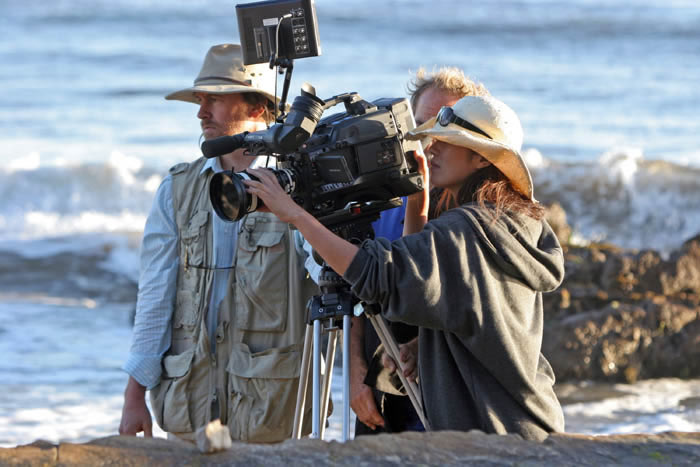
Good cinematography involves the creation of beautiful and/or arresting images on screen; it can also tell us more about a character or a location than any amount of dialogue or music. Shot composition, camera movement and the way a Director of Photography chooses to manipulate light and shade, all combine to create each film's unique photographic signature. A great deal of thought, preparation and hard work is involved in moving and operating cameras in ways that enhance, and do not detract from, what is happening on screen. Camera crews work with extremely delicate, expensive equipment and are amongst the most highly skilled practitioners on any film crew. They work closely together to create seemingly invisible camera moves.Camera crews work with extremely delicate, expensive equipment and are amongst the most highly skilled practitioners on any film crew.


Script Supervisors aka Continuity work as part of the Camera Department on Feature Films and Television Dramas. They ensure that, despite the fact that films are shot entirely out of script sequence, they eventually make continuous verbal and visual sense.1st AC is responsible for focusing and refocusing the camera lens as the actors move within the frame of each shot and the focal length changes.Aerial flying shots which establish the grand scale of cinema, and sequences where the audience is treated to a shot from above that takes in all the action from a dramatic and exciting perspective,are the responsibility of the Aerial Director of Photography.The responsibility of the Grip is to build, maintain and operate all the equipment that supports the camera, such as tripods, dollies, tracks, jibs, cranes, and static rigs.

Lighting
The Lighting department plays a crucial role in most film crews. Humanity lives by the light of the sun and, when it sets, artificial lights of different kinds and intensities are required. Although some productions may make use of daylight, for the most part it is necessary to use artificial light to achieve the visual image required. The different members of the Lighting crew are responsible, together with others such as the Camera crew or Designer, for the look and feel of the images that are captured on the screen. They set up a wide range of lighting equipment to achieve a variety of moods, atmospheres and effects, as well as helping to make the actors, performers and participants look right for their roles.


The different members of the Lighting crew are responsible, together with others such as the Camera crew or Designer, for the look and feel of the images that are captured on the screen. Gaffers are in charge of all the electrical work on a production, leading the team of technicians who install the lighting equipment and arrange the power supply in order to create the designed lighting effects. Lighting Technicians help to provide the relevant lighting and power supply for a film, either on a studio set, or on location. The job of the Director of Photography or Cinematographer is to give a film its unique visual identity or look. The Genny Operator's role is to maintain and operate the electricity generators which are taken to, and used at, locations where an electricity supply is difficult to obtain, or is insufficient for the requirements of the production, e.g., in a desert, in a field, on a bus or boat.

Production Sound.
Recording all sound on set or on location is the work of the Production Sound Crew which includes Production Sound Mixers, Boom Operators, and Sound Assistants. Although film is considered a primarily visual medium, much of the storytelling and emotional resonance of a script is conveyed through dialogue. Ensuring that the dialogue recorded during film shoots is suitably clear is a complex job; most film sets are challenging for the Sound Department as there are often unwanted noises to deal with, or the desired camera shots hamper the placing of microphones.Although it is sometimes easier to re-record dialogue after the shoot, most actors and Directors prefer to use the sound captured on set or location. Production Sound Crews also record atmosphere or "wild" tracks on set or on location to assist the Post Production Sound department during the editing process.

Art Department.
Films can be located anywhere; creating the visual world or setting for a film is the role of the Art Department. The look of sets or locations transports audiences into the world of the story, and is an essential element in making films convincing and evocative. These settings are rarely left to chance by film makers; a great deal of work and imagination goes into constructing appropriate backdrops to any story. The Art Department usually employs the largest number of people on any film crew. On big budget fantasy, period drama or sci-fi films, the Art Department Offices, and Drawing and Construction Studios can occupy a vast area and employ hundreds of talented people. Art Directors act as project managers for the biggest department on any film. They facilitate the Production Designer's creative vision for all the locations and sets that eventually give the film its unique visual identity.


Set Decorators provide anything that furnishes a film set, excluding structural elements. Production Buyers provide administrative support to Set Decorators, and carefully monitor and control the set decorating budget to avoid overspending. Specialist Researchers work closely with the Production Designer, the Supervising Art Director, and Set Decorator, but also provide backup in the form of detailed research to the entire Art Department. Storyboard Artists translate screenplays, or sequences from screenplays, into a series of illustrations in comic book form. Production Designers are major heads of department on film crews, and are responsible for the entire Art Department. They play a crucial role in helping Directors to achieve the film's visual requirements.

Supervising Art Directors have a primarily organisational role on big budget films which require a number of sets and involve large Art Departments. They manage the budget and schedule, enabling Production Designers to translate their vision into reality. Concept Artists produce the illustrations that help Production Designers to realise their vision for films.Graphics Artists produce all the props for films that contain graphic items.Draughtsmen are responsible for drawing up set designs.

Our short film.
Once researching these job roles we had a discussion about the different job roles we would have to take on as a group. I have been put into a group with Matt and Bobbie and we are going to create the short film Fleeting. Bobbie wrote this script and thus she automatically became the director, so Matt and i had to decide between Camera, Production designer and Lighting and Sound.

Director- Rebbecca O'Brien, she will be responsible for the following...
-Casting
-Getting the performance she wants from the actors
-Shot list
-Script Writing

Director Of Camera- Matt, he will be responsible for the following...
-The framing and positioning of camera
-Focus and Depth of field
-Stock and equipment
-Story board
-Risk Assessment
-Technical Reece

Production designer- Emma Campbell, i will be responsible for the following...
-Mise en Scene
-Costume
-Location/Set design
-Props
-Hair and Make-Up
-Character Movement
-Continuity

Finally we decided that since there is only three members of our group that we would all be responsible for the lighting and sound. And in this we will be responsible for the following...
-Technical Reece
-Booking and organising lighting equipment
-Positioning and continuity of lighting
-Planning and recording of all sound

Friday, 5 November 2010

Post 9-Individual Script Feedback

When we were first told about this task we were told we had to initially think up ideas for a short films lasting six minutes. We have come across many scripts in the AS and beginning of the A2 course, however when it came to thinking of an idea and putting it into practice it proved to be quite a challenge. My initial idea was to involve the idea of child poverty into my script because i feel its a topic that needs to be discussed more in society, however when thinking about the practicality of this i soon realised that using a child would be a  lot of hassle when it came to casting and filming. A few weeks prior to this Becky, a producer of short films came in to talk to us about how to make a short film successful and the art of script writing and it is then when i realised how much thought must go into script. Becky stated how difficult it was involving young children and the elderly into our short films. She also stated the film must have a catalyst for change, and be interesting, grabbing the audiences attention throughout.

My Script-Never Forgotten.
I began with the idea of involving a small child throughout the play but then realised that this wasn't a realistic idea, because they would be difficult to cast and possible a liability when filming. I then came up with the idea of shooting the whole film from the child's point of view, this way i could use an older child so they would take to direction a lot easier. I wanted my film to be stylistic and really get the message across to the audience, rather than sending them a subtle and un-noticed message.

Watching the short film 'Does god play football' really showed me how to heavily involve the use of music and lighting to create an overall more stylistic effect. As seen in the image below my script was set out completely wrong, the font was the wrong style and size and also the font layout was incorrect, this could obviously be easily corrected however Becky stated that a producer won't even look at your script if the font and layout aren't correct therefore it seems to be an essential part of the whole script.

Class Feedback
When asking fellow classmates about my script they all came back with similar feedback, stating it was quite confusing and that the message wasn't clear, which is essentially the complete opposite of how i wanted to script to come across. Others went on to say that if my script did get made into a short film it would be a very complex editing process. Another criticism was that the layout was not in correct script format. In contrast to these criticisms others stated that it was a good initial idea and picked up on my intended message. I feel all of this feedback is very constructive and i can work on my script to make it less confusing and try to make the message a lot clearer.

Becky's Feedback.
When reading my script Becky said that she found that being stylistic can work effectively, however if there's no point to your film it doesn't work. She told me i needed to include a catalyst for change and show to what extent Amy had been scared emotionally by her mother as the audience need to relate, possibly through personal experience. She stated that my message did not come through to the audience enough. However she did say if i pulled it off when filming that it would be an extremely effective short film. I completely understand all of Becky's feedback and feel that the ideas i had in my head did not relate on paper as well as i thought they did, this error meant the majority of people who read my script got confused as to the point of the story. For this reason i have altered my script, with less flashbacks and i have added to the ending. The image below shows my second draft of my script.

Monday, 1 November 2010

3a-Target Process

Targets.

In June i set myself five targets that i was aiming to achieve whilst producing my A2 project,the first was to stick to all deadlines set by both my teachers and fellow class mates whom i am working with. At the moment i still feel this target needs improvement i feel i am leaving work too late and then not putting my full attention to it, i am now trying to be as organised as possible and really trying to work towards this Target in order to gain the best grade possible.


My second target was to improve my understanding of technology and try to take a more hands on role within the group. I said i felt like i needed to improve on my understanding of the editing suit and also the use of camera when recording footage. Thus far i have not been able to fulfill this target as we have not begun our group work and the only technology we have been using is our blogs. I do however feel that my capability and work on my blog has improved i now have total understanding of how to use my blog.


Following on i stated that i wanted to keep up the presentation of my blog and include everything on it that can be included.Currently i feel i am in the process of doing this, i am trying to keep my blog as visual as possible and include all the things we have done in lessons, i hope to carry this on with future work and gain the best grade possible.


My fourth target was to use all the software to its full potential in order to produce the best project possible. I stated that i was going to learn how to use photo shop correctly to produce a good quality postcard that could be distributed for our short film. I have chosen to improve upon using photo shop as i have never used the programme before so don't have any previous knowledge about it and also feel it could play a vital role in the advertising scheme. I haven't yet be able to use photo shop as the majority of the work we have been doing has involved writing out scripts and blogging however i believe this target will be achievable when we get round to advertising our short films.

My final target was to make sure that i stay organised throughout, making sure i don't fall behind with any tasks or work given to me. I think this is a very important skill that you need in producing films to make sure you are staying on top of the work load and keep organised. I feel i have kept to this target i have kept to blog deadlines however may have fallen behind with some independent study, i will try to become more organised as the project continues.


Overall it would seem fair to suggest that the targets i have set myself are all achievable, they just all require time and effort. I feel that i am sticking to the majority of them i just need to work harder on my organisation and will also be able to fulfill certain targets once we have filmed and begin editing.


Post 7 Creating your own script

We began our lesson by being told that we all had to individually state what we had done the previous night for one minute. When being given the task it sounded somewhat easy, however when it came to it the majority realised it was not as easy as we had once thought. It seemed evident that we all rushed through the event of the previous evening and failed to talk for the full one minute. The one thing that none of us had included was the small details and we only came to realise this when out teacher described what she did even unfortunately including her daughters 'Poo filled nappy'. After she was perfectly able to talk for the full one minute it became clear that she added the small detail that we all lacked. This is linked to Narrative that is defined as ‘The coherence/ organisation given to a series of facts’ as well as ‘everything we seek a beginning, a middle and an end.’ When Reciting our events we all used narrative to help explain our events and placed them in order of importance or in some cases in time.This is supported by another quote that says by using narrative 'We understand and construct meaning using our experience of reality and of previous texts.’ When telling our stories we chose to leave out what we thought was irrelevant for the audience to hear, this was done by using our passed experience, for example telling fellow peers and knowing what the audience will find interesting to listen to.

An easy way to get to grips with the theory is by following this explanation ‘story is the irreducible substance of a story A meets B, something happened, order returns'. While narrative is the way in which the story is related and told, 'once upon a time there were three bears'.When creating our scripts we had to think very carefully about the ways in which we want our storyline to be portrayed. The different ways in which the narrative can be interpreted is done through the audience. Julian McDougall warns us not to ‘Clumsily apply a formalist model’ as it ‘does little in terms of understanding our roles in constructing narratives, and how narratives carry discourse that appear natural.’ The substance of the script holds great importance however i believer it is the way in which its told which really attracts the audience.

Following on from this we looked at the different models of narrative from Propp, Todorov, Levis-Strauss and Barthes. Each had very different ideas about narrative, however all agreed that audiences have their part to play in interpreting narrative. Propp believed in Russian fairly tails and proposed that there are 8 different types of character that are always present in story's, these are A Hero, Villain, Princess, Helper, Donor, Dispatcher, False Hero, Princess Father, he further added that there is only ever thirty one different actions that these characters can do. In contrast Todorov produced that there will always be equilibrium the normal narrative, dis-equilibrium something that will change the narrative and then new equilibrium the change within the narrative, this is a state of rest or balance, for example equilibrium represents balance in the narrative where as disequilibrium represents a break of that balance. Following on from this he suggested at the end the story will always reach new equilibrium. Levis-Strauss proposed that there are always Binary Opposites for both the past and present tense,  for example Good Vs Evil, Hero Vs Villain, and it is through these binary opposites that the narrative develops. Finally Barthes proposed that there is always Enigmas which raise questions and the audience will carry on watching to answer this question. However as an audience everyone will have a different interpretation.

Finally we were asked to look at another short film called Signs, an upbeat and generally more lighthearted short film in comparison to the others we had watched. To look at the narrative in this short film we watched it in sections and paused the film to try and guess what was going to happen next and as a audience what are we conditioned to think. We discussed this as a class and it was interesting to listen to the different opinions of what people though would happened next. When looking at this short film we thought about what makes a ‘good’ short film this is quite controversial as everybody has different opinions.


Following on from this lesson we were asked to brain storm all the different places we could think of where we could get ideas for our own scripts, there are many different ways in which you can start to get ideas for your script.  For example one of the first things you need to do is establish the world in which the character lives in, then the main Character and what kind of personality and characterises they are going to have, finally the problem you have to establish, what kind of problem is going to get in the characters way and prevent them from carrying out their task. Once you have created these three things you need to next think of another three things, the first is a want, what is going to be their motivation throughout your story line, next  a need this can be anything they feel they must have, then finally an obligation what must the character feel they have to carry out.

In contrast to this another way of writing a script is by completing the Four Steps to writing a script.

1. Find the ending of your story
2. Then find the beginning
3. The first turning point, this could be an event that gets the story going
4. Finally the second turning point, this can swing the story around and sets up the ending.

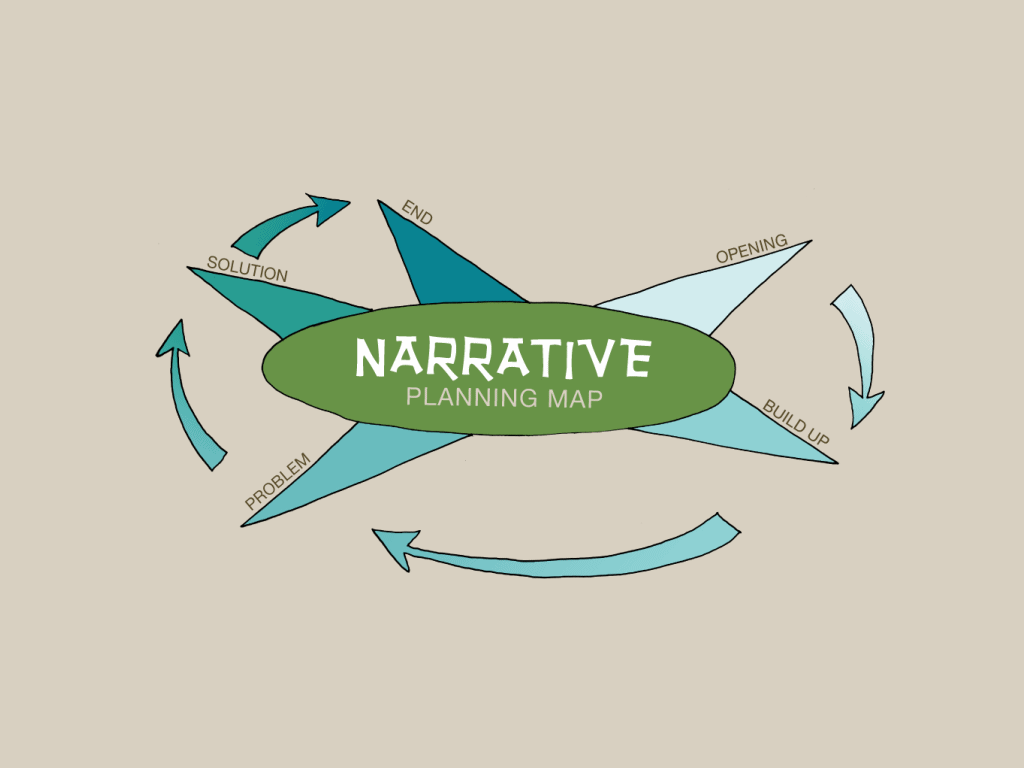
If this has not worked then the final plan is to use the  ‘Making Short Films Eight Point Guide.' This method is far more detailed than any others.
1.Introduce the character, set the scene
2.Give the character a problem
3.Let character work out the problem
4.Before setting out to solve the problem , there may be a moment of doubt that will require the hero to seek advice. Let audience know more about the problem and weigh it up in own mind
5.With new resolve (oftener a magical gift from the mentor) Hero sets out to overcome the problem
6.Overcoming the problem, will meet extreme opposition from the rival will usually have greater or different strengths and will bear similarities to the hero
7.Hero will appear to fail in his quest. Glimpse defeat, even death, will require superhuman effort to overcome the daunting final task
8.Hero wins the final battle, the journey has made them a different person will never go back to the way they were.

An example of the 8 point guide when looking at a story such as Goldilocks And The Three Bears is shown below,

1. An introduction into the Three Bears
2. The problem of the porridge being to hot
3. Try to solve the problem by leaving it to cool down and go for a walk
4. The introduction of Goldilocks, where there is a moment of doubt
5. Goldilocks eats the porridge, breaks the chair and sleeps in the bed
6. The three bears arrive back home and try to overcome the problem by telling Goldilocks to leave
7. The Three bears seem to fail in there quest as Goldilocks is still in their house and have broken the chairs
8. Goldilocks leave and the Three bears carry on

Tuesday, 5 October 2010

Post 6- What Makes A Good Short Film ?


Short films are the fastest growing section of the movie business, with major directors, big brands, and web guerrillas all using them to reach big audiences. A recent issue of The Independent says 'There has never been a better time to watch short films. There are more being made, there are more festivals that cater to the format, and the Internet and portable devices are perfect for watching short films.'


We were lucky enough to have a visit from film Producer Becky Knapp, her visit not only gave me great insight into film making but also taught me a lot about how the film industry works and the purpose of a short film. Short films can range in length from three to five minutes, or twelve to fifteen minutes. The Times states 'Most festivals will accept a short anything that is under 30 minutes, but many programmers and curators also say that they find it difficult to place longer short films (ones over 20 minutes). If your film is over 20 minutes long it may well need and be able to cope with more characters and a secondary story strand. The majority of funding in the UK is aimed at films that are around the 10 minute mark.'  If your film is five minutes there is no time to establish the characters so you must work on stereotypes, in contrast, if your film is twenty minutes long it may have a subplot so there is more room for complex characterisation. In a short film the character in the film must have a problem or obstacle otherwise there is a loss of dramatic tension. You must also think about who's point of you you are telling the story from. Becky quotes 'A film is about showing and not telling'. The main character must have a want, need or obligation. In any film there must be a catalyst for change, the climax and finally a resolution. This can be a very strenuous task when creating a short film as you have limited amount of time in which to include all prior things. Finally Becky stated that you must try and sum up your film in one line, this is called a 'log line'.

Becky gave us several of her scripts, one of these was 'Does God Play Football' first we read the script and from reading the script i did not imagine the film how it was when we watched it. This film had an impact on me, i enjoyed watching the story unravel and the element of the 'Feel good factor' the music and lighting in this film were particularly effective.The warm glowing lighting when there was a mention of God helped the audience to understand the cut off point between real life and fantasy. I feel when producing my own short film i would like to incorporate a form of this cross between two worlds, its effective in a sense that the audience can relate because its a realistic and relative to modern, every day life.

After this Becky went on to state that the title of any film is imperative. It either has to relate to and set up the genre or in contrast have nothing to do with the genre to leave people guessing, for example Sean of the dead. As well as this Becky explained that a film regardless of its length must have one sentence that summarises what happens, what is revealed and that is significant to the plot. Finally Becky went on to say that with short films you must keep the tone consistent, keep the character active and show the change in the character.Becky’s visit left us grate incite into the world of short film, provided us with lots of information and most importantly a variety of scripts.  The script we focused on was “Does God play football?” I enjoyed reading through this script and after we had done this as a class we got to watch the film, i really enjoyed reading through the script and then watching the film because i showed me how a script can come to life. With this in mind it helped me to develop my idea as well as get a good insight on how scripts should be set out.

When producing a short film it is clear that the writing and idea development part of any film is likely to be one of the more challenging areas for film makers. With this in mind when writing a script it is important to have previously approached the idea generation and writing stage of your short film. Many critics have analysed a variety of scripts and pre-production work and have said that the most frequent problem is that all producers want to include too much information for their short films. A key and successful part of this short film i feel is the use of music, music plays a huge role in helping to recognise the genre of the film and in 'Does God Play Football' the film begins by blaring out classical music including the sound of an organ which instantly tells the audience that the plot is based around a church and the concept of religion. The use of music also helps to create emotion and tension and key parts of the film.

Friday, 1 October 2010

Post 5- Audience Theory & My Short Film

I feel i now have a greater understanding of short films, the industry, and the theorists views. Analysing films i feel is a difficult task, but in doing it you gain understanding of the conventions of short film and it shows you as a director what work and what doesn't. As i will be making a short film for my A2 coursework i feel it somewhat imperative to watch and analyse a number of short films. Thus i have looked at four short films and analysed them on the following...

-Preferred Reading/Dominant hegemonic position
-Negotiated Reading/Negotiated hegemonic position
-Oppositional hegemonic position
-Aberrant decoding
-Moral Panic
-Mode of Address
-Profile the target audience
-Consider the viewing environment


The Black Hole


Watching this short film the dominant hegemonic/preferred reading that the audience are given is that the man has been given this black hole on a piece of paper and now he has the power to take anything he wants by using this black hole. The most powerful message that the audience gets is that you shouldn't take what isn't yours. The Oppositional hegemonic, this is from the audiences point of view, watching this short film we can understand why he is taking the money and chocolate with the new power his has but we can disagree that he is being greedy and taking what doesn’t belong to him.

The moral panic occurs in this short film as the audience get a premonition that something bad is going to happen in regards to the man using the black hole, the music that accompanies this just reinforces the idea of panic. As there is a lack of dialogue the audience are fully focusing on the situation, creating more panic and tension. The mode of address is the relationship between the addresser and the addressee , in this articular is showing the audience what you potentially could do if they knew they wouldn't get caught out. The Black Hole i feel appeals to a wide and varied audience due to its comical nature, despite its comical nature i believe there is a hidden message which would only be obvious to an older generation audience. As this film is a comedy i believe showing it to a large audience would be more effective than showing it to people individually.

About a Girl


The audience start to understand and recognise the girls lifestyle and her background, in addition to her lifetime dreams of becoming a pop star with her friends in a girl band. The most dominant message the audience receives is that the girl has been desensitised by her parents, which mean she doesn't know the difference between right and wrong. This is supported when she throws her baby into the water in the last scene. The oppositional hegemonic, the audience can understand her feeling of being neglected by her father and sometimes by her mother, as well as this the audience can relate to her ambition to make something of herself , the audience won’t understand and agree with her throwing her baby into the water. The nnegotiated hegemonic, the audience can agree as well as understand the girl and her motives, however some audience members may completely disagree with what the girl has done.

 
Moral Panic, the closing scene shows the girl throwing the baby in the water and it is this that gives the audience an intense feeling as it was so unexpected, most audience members would watch this section in disgust. This leaves the audience psychologically asking questions about why she did it. The Mode of address, this is the relationship between addresser and addressee, and in this short are constructed by looking at the working class. The film is aimed at a middle class audience, as it gives them the opportunity to see first hand what working class life is like, the middle class are seen as outsiders and looking in to a different world and way of living. This short film begins by trying to gain audience sympathy, where as at the end the audience feel no sympathy what so ever. This short won many awards including a 2001 BAFTA for best short film, Edinburgh Prize best short film and the Turner Classic movie shorts top place. I believe this film targets target a predominantly middle class audience, however i don't believe this sort of film would initially Target this demographic. In conclusion i feel this film would be better shown in small groups, creating a more intense atmosphere.


Wasp

The short film ‘Wasp’ was directed by Andrea Arnold, the film is a social realism film. 'Wasp' is a representation of broken Britain, it creates a sense of moral panic through its presentations of the shambolic state of the lives which the children in the short film are forced to live. This is achieved through the sense of the numbers of single mothers rising and the concept of children mothering other children. Due to it's subject matter, 'wasp' is a highly unpleasant and uncomfortable film to watch. As a viewer it is hard to feel any form of sympathy towards the main character Zoe,  as you watch her hungry children eat sugar when there is not food in the house,  and scrounging chips off of the floor.

Arnold is constantly trying to inform us that we as an audience as well as a society look past the poverty that occurs in our country, and thus by watching this film we are reminded. The use of stereotypes is a strong message within this film, showing the interpretation as a society that we have upon 'Working class Britain'. An example of this is when Zoe is trying to impress a man she used to no by spending money she hasn't got on alcohol, whilst leaving her children outside in a car park scrounging for food. At this point the audience feel no sympathy for her character, however i feel this is a bad representation of single mothers, however this reinforces stereotypes believing single mother are unable to cope. This is backed up throughout the whole film as we see a strong neglect for her children. Looking at the film from an audiences point of view, the negotiated hegemonic view could differ greatly from the dominant hegemonic. Audience members could assume she is a good mother however is just finding it difficult to cope, thus befriending this man could give her a helping hand.

Does God Play Football


The 10 minute short films fallows the life of Tommy, a boy growing up without a father in a small Yorkshire town, he prays for a father which is delivered in the shape of the new local Catholic priest. We then get the impression from the mother he is actually, his real father. The dominant hegemonic shows how the young boy fills in the emotional gaps in his life and explores spirituality through a child's eyes, yet blurs the line between fantasy and reality.  When watching this film i felt the stereotype of a working class mother was represented, as with 'Wasp' i feel this film portrays an aspect of the mother not coping and needing a man, other village members seem to look down on her, as well as this we see the young boys desire for a father that make you feel as if shes not doing a good enough job as a single mother. This film seem to portray an oppositional hegemonic position, the film seems to suggest that God is a father figure which plays on irony as his Father is in fact a member of the church.Tommy's Passion for football i believe shows a need for a male figure in his life, and i believe although this film does have a 'Feel good factor' it actually plays on the idea of the working class, demonising them, in this case stating single parents aren't capable. I feel this film would target a predominantly younger audience demographic however is suitable for all ages groups, i also feel this film would be better viewed by a large audience so that they could discuss what they felt about the film at the end.